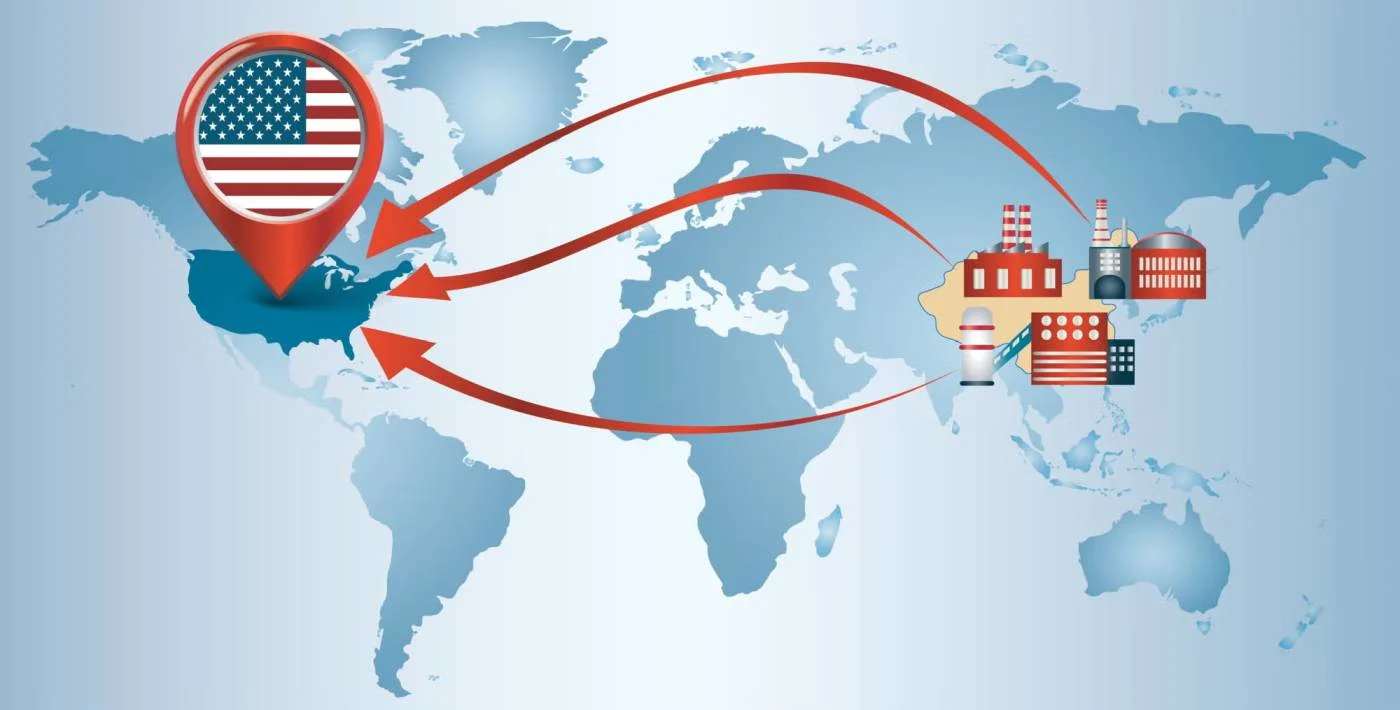
For thirty years, China was the world’s factory. That era is ending. A new strategy called friend-shoring is pulling the rug out from under them. Friend-shoring means rich countries only trade with political allies.
They are moving factories out of rivals and into trusted friends. For China, this friend shoring supply chain impact China is not a rumor. It is a daily reality. Factories in Guangdong are shutting down.
Orders are going to Mexico and Vietnam. If you work in global trade, logistics, or manufacturing, you need to understand this shift. Your next contract depends on it.
The Three Amigos: Reshoring, Nearshoring, and Friend-Shoring
Let’s clear up the confusion first. You will hear three terms thrown around.
Read Also: Exploring the Benefits of China Tech
Reshoring is bringing production back to your own country. Think Apple making iPhones in Texas. It is expensive but safe.
Nearshoring is moving production to a neighboring country. US companies go to Mexico. German companies go to Poland. Shipping is faster. Politics are aligned.
Friend-shoring is the big one. It is the political filter. You only trade with countries that share your values and security interests. You avoid rivals like China or Russia. Even if Vietnam is farther than Mexico, if they are a "friend," they win.
The friend shoring nearshoring reshoring debate usually ends with one answer: Friend-shoring is the long-term play. It is less about cost and more about risk.
Why Is This Happening Right Now?
I have watched supply chains break three times since 2020. First, COVID shut down Shanghai. Second, the Ever Given blocked the Suez Canal. Third, the Ukraine war froze Russian energy.
Each time, Western CEOs realized one thing. China is a single point of failure.
You cannot put all your eggs in a basket that might get locked down tomorrow. That is not business. That is gambling.
So, the US passed the CHIPS Act. Europe started the Global Gateway. They are paying companies to leave China. They are paying them to set up shop in "friendly" nations like India, Turkey, and Chile.
This is not about saving money anymore. It is about surviving the next crisis.
The Devastating Impact on China (Real Numbers)
Let me give you the hard truth. China is not collapsing tomorrow. But the bleeding is real.
Foreign direct investment into China dropped 27% in 2024 compared to the previous year. That is billions of dollars walking out the door. Apple now assembles AirPods in Vietnam. Dell plans to remove all Chinese chips by 2026. Tesla’s Berlin plant buys fewer parts from Shanghai.
The friend shoring supply chain impact China shows up in unemployment. Young people in Shenzhen cannot find export jobs. Warehouses are half empty. Shipping container prices have crashed because there are fewer goods to move.
China built its entire modern economy on being the world’s workshop. When the world stops buying, the workshop closes.
How Friend-Shoring Works in the Real World?
You own a bike company in Ohio. You used to buy aluminum frames from Tianjin. Cost: $50 per frame. Shipping: 30 days.
You Must Also Like: China's Economic Recovery Post-Pandemic: A Comprehensive Guide
Now, you hear about friend-shoring. You look at Mexico. The frame costs $75. But shipping is 3 days. No tariffs. No political risk.
Do you pay the extra 25?Yes. Becausethat25? Yes.Becausethat25 buys you safety. You do not lose inventory to a typhoon in the South China Sea. You do not get stuck waiting for a political visa.
That is the calculation every buyer is making right now. Cost plus risk equals total price. When risk goes up, China becomes expensive even when the sticker price looks cheap.
Friend-Shoring vs. Nearshoring: Which Wins?
This is where people get confused. They think nearshoring replaces friend-shoring. It does not.
Nearshoring is geographic. Friend-shoring is political.
Look at Vietnam. It is not near the US. But it is a friend. So Vietnam wins orders from China.
Look at Mexico. It is near the US and a friend. So Mexico wins even more.
The friend shoring and nearshoring combination is the gold standard. You want a country that is close and allied. That is why Northern Mexico is building new factories every week. That is why Poland is becoming Europe’s new manufacturing hub.
If a country is only a friend but far away (like Chile), they get some business. If a country is only near but not a friend (like Cuba), they get nothing.
The Brutal Truth for Small Businesses
I hear small business owners panic about this. They think friend-shoring is for giants like Apple or Walmart. It is not. If you import $500,000 worth of electronics from China, you are small enough to move. In fact, you have an advantage.
You can move faster than the big guys. Here is what I tell people to do. First, find a distributor in Turkey or Vietnam. Do not try to build a factory yourself. Just find a local partner who already has the machines.
Second, order a test batch. Not a full container. Just 100 units. Pay the higher freight cost. See if the quality holds.
Third, calculate your real landed cost. Include tariffs, insurance, delay penalties, and bank fees. You will often find that "cheap" China becomes expensive after you add the risk.
Finally, do not sell your China inventory at a loss. Burn it down slowly while you build the new supply line. That saves your cash flow.
Who Should NOT Do Friend-Shoring (Honest Warning)?
Here is the part no consultant will tell you. Friend-shoring is not for everyone.
If you sell ultra-low-cost disposable items, you cannot move. Plastic forks. Balloons. Basic party supplies. The margin is too thin. Vietnam cannot match China’s 10-cent price point. You are stuck. Accept the risk or get out of the business.
If you need highly specialized tooling that only exists in Shenzhen, you cannot move. Medical devices. Aerospace fasteners. Proprietary chemical formulas. China has the molds. You wait.
If your customers do not care about politics, do not move. Not every buyer reads the news. If they just want cheap sneakers, give them cheap sneakers. You are not a politician. You are a merchant.
For everyone else, you should at least look at moving 30% of your volume. Keep a toe in China but shift the rest to friends. That is the smart hedge.
The Hidden Costs No One Talks About
Moving a supply chain sounds logical. It is hell in real life.
I watched a friend move his clothing line from Nanjing to Guatemala. He saved on tariffs. Then he lost his mind on quality control. Chinese factories run like clocks. Guatemalan factories run like... well, they run differently.
He had to hire a full-time inspector. That inspector cost $40,000 a year. His savings disappeared.
Friend-shoring creates new jobs. But those jobs are for managers, lawyers, and inspectors. Not for factory workers.
Also, language barriers are real. Chinese suppliers learned English to sell to the West. Turkish suppliers? Not so much. You will need translators. You will need local agents. You will pay for hand-holding.
The Geopolitical Clock Is Ticking
Do not wait for a law to pass. That is a mistake I see often.
The US election cycle controls this trend. If a new administration hates China more than the last one, tariffs jump overnight. You do not get a warning letter. You get an email from your freight forwarder saying, "Your container is held at customs. Pay 25% or lose it."
I have seen that email. It ruins your month.
Move before the law forces you to move. That is how you win. You secure capacity in a friendly country now. You sign a lease now. You train a manager now. When the tariff bomb drops, your competitor is crying. You are shipping.
Practical Action Steps for This Week
Do not overthink this. Do three things right now.
Step 1: Audit your last ten shipments from China. Mark each one with a risk score. Low risk: commodity plastic. High risk: tech components or batteries. Anything high risk, start searching for alternatives today.
Step 2: Open a free account on a B2B platform like Alibaba but filter by country. Search for suppliers in Mexico, Vietnam, Poland, or Turkey. Send five inquiries. Do not buy anything. Just see who responds fast. Speed tells you everything about their professionalism.
Step 3: Call your freight forwarder. Ask them directly: "If I want to ship from Ho Chi Minh City instead of Shanghai, what changes?" Let them do the math. They want your business. They will help you.
Long-Term Outlook: Five Years From Now
Predictions are stupid. But trends are not.
In five years, China will still make iPhones. They will still make steel. But they will stop making the middle stuff. The t-shirts. The toys. The simple furniture. That stuff moves to friends.
India is the wild card. They are not really a friend of the US. But they are not an enemy. They are a frenemy. That might be good enough for some goods.
Vietnam runs out of factory workers soon. Their population is not infinite. That creates an opening for Indonesia or the Philippines.
Mexico wins the biggest prize. Proximity to the US cannot be beat. I expect Northern Mexico to look like Southern China did in 2005. Dusty roads turning into industrial parks in three years.
For China, this is a slow decline. Not a crash. They have internal demand. Their own middle class buys a lot of cars and phones. But the era of endless export growth? That is dead. Friend-shoring killed it.
Final Verdict: Is Friend-Shoring a Fad?
Absolutely not. I was skeptical in 2021. I thought companies would forget COVID and go back to cheap Chinese labor. They did not.
Because the risk never went away. If anything, it got worse. Taiwan is a flashpoint. The South China Sea is contested. Cyberattacks from state actors are rising.
When you are a CEO, you have a duty to your shareholders. That duty is to not lose the factory. Friend-shoring is just self-defense.
You do not have to love politics to play this game. You just have to watch where the money flows. Right now, it is flowing out of China and into friendly ports.
Get on the boat or get left at the dock. The choice is yours. But the schedule is leaving early.