I woke up on April 14 to a notification that stopped me mid-coffee.
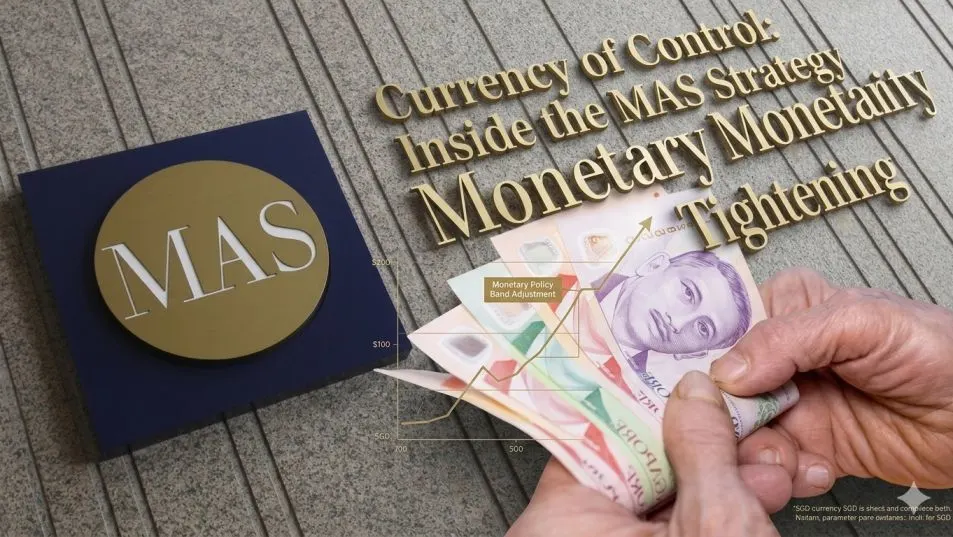
The monetary authority of Singapore MAS had tightened policy. First time since 2022.
I have been following MAS statements for eight years. Through Covid. Through Ukraine. Through the Trump tariff shocks of 2025.
This one felt different.
Here is what happened. MAS increased the slope of the S$NEER. That is the Singapore dollar nominal effective exchange rate. In plain English? They will let the Singdollar rise faster against a basket of trade partner currencies .
Why now? The Iran war. Energy prices spiking. The Strait of Hormuz nearly blocked.
I spent the last 48 hours reading the policy statement, three analyst reports, and talking to a former MAS economist (who asked not to be named). Here is what I learned about the monetary authority of Singapore MAS strategy. And why it matters for your wallet.
What Is the S$NEER Slope? (I Will Explain It Like You Are 15)
Most central banks raise interest rates to fight inflation.
Singapore does not.
The monetary authority of Singapore MAS uses the exchange rate. Because Singapore imports almost everything. Food. Energy. Raw materials. Even drinking water.
Read Also: Differences Between Planned and Free Market Economic System
The S$NEER is a basket. It holds currencies of Singapore's major trading partners. China. Malaysia. US. Eurozone. Japan.
MAS lets the Singdollar move up or down inside a secret band. They control three things:
-
The slope – how fast the currency appreciates
-
The width – how much the currency can move
-
The center – the midpoint of the band
On April 14, MAS steepened the slope. They kept the width and center unchanged .
What this means for you: Your Singdollar will buy more imported goods over time. But that strength comes at a cost. Exports become more expensive for other countries. Growth may slow.
Why Tighten Now? The Iran War Changed Everything?
I have to be honest. Three weeks ago, most analysts expected MAS to hold steady.
Then the US-Israel-Iran conflict escalated. The Strait of Hormuz got choked. About 20% of global oil passes through that strait .
Singapore felt it immediately.
Here are the numbers that scared MAS:
-
Q1 2026 GDP growth slowed to 4.6% year-on-year. Down from 5.7% .
-
On a quarterly basis? The economy contracted 0.3% .
-
Manufacturing output dropped 4.9% .
And yet. MAS still tightened.
Why? Because 95% of Singapore's electricity comes from natural gas. Almost all of it imported . When energy prices jump, everything jumps. Transport. Food. Rent. Everything.
Morgan Stanley put it best. MAS is walking a "delicate balance" between inflation and growth.
The Inflation Numbers – Raised Twice in Four Months
Let me show you how fast things changed.
October 2025 forecast:
-
Core inflation: 0.5% to 1.5%
January 2026 forecast (first revision):
-
Core inflation: 1.0% to 2.0%
April 2026 forecast (second revision):
-
Core inflation: 1.5% to 2.5%
Three forecasts. Four months. One clear direction .
MAS now expects "a wider range of imported goods and services" to cost more in the coming quarters .
Even if the Middle East conflict ends tomorrow, MAS says energy prices will stay high for a while. Delivery delays. Countries rebuilding reserves. Supply chains still broken .
My take: The monetary authority of Singapore MAS is not guessing. They are reacting to real data. Imported energy costs have already risen. The question is not "if" inflation will hit. It is "how hard".
Tightening vs Global Slowdown 2026 – The Balancing Act
Here is where it gets tricky. The tightening vs global slowdown 2026 debate is real.
MAS tightened into a slowing economy. That is unusual. Most central banks ease when growth softens.
But Singapore is not most economies.
The case for tightening (pros):
-
Imported inflation is already here. Energy prices up sharply.
-
Core inflation will pick up and stay elevated for quarters .
-
A stronger Singdollar makes imports cheaper. That protects households.
The case against tightening (cons):
-
GDP growth is slowing. Q1 quarterly contraction is worrying .
-
Stronger currency hurts exports. That hits manufacturing.
-
Global demand is weakening. Singapore cannot escape that.
CGS International said the current policy stance "remains appropriate" but further tightening depends on commodity prices.
Morgan Stanley expects no further tightening in July. Their base case is hold steady.
But here is the warning from both. If imported inflation starts pushing up core measures more than expected, MAS will act again.
Who Benefits from a Stronger Singdollar? And Who Gets Hurt?
I have seen this question asked ten times since Tuesday. So let me break it down.
Winners from MAS Tightening
1. Households who buy imported goods
Your groceries from Malaysia. Your electronics from China. Your clothes from Bangladesh. All get cheaper in Singdollar terms.
2. Travelers going overseas
Your Singdollar buys more yen, baht, ringgit, and dollars. I checked the rate this morning. Better than two weeks ago.
3. Retirees with savings in Singdollars.
Your purchasing power holds up. Inflation eats less of your nest egg.
Losers from MAS Tightening
1. Exporters: Small manufacturers selling to the US or Europe. A stronger Singdollar means your buyers pay more. Some will switch to cheaper suppliers.
You Must Also Read: Economic Opportunities in Urban Development
2. Tourism-related businesses: A strong currency makes Singapore expensive for foreigners. Fewer tourists. Less spending.
3. Anyone with debt in foreign currencies: If you borrowed in US dollars or yen, your repayment just got more expensive in Singdollar terms.
My honest advice: If you run a small export business, hedge your currency exposure now. Talk to your bank about forward contracts. Do not wait.
What Economists Are Saying – A Quick Scorecard?
I read through seven analyst reports. Here is who got it right and who is still watching.
OCBC – Predicted the Tightening Correctly
OCBC called the slope increase before it happened. They said a "double-barrel" tightening (slope + re-centering) was possible but less likely.
Their base case was exactly what MAS did. Slope up. Width and center unchanged.
Verdict: Trust OCBC's analysis for the next policy meeting in July.
Morgan Stanley – Cautious but Accurate
Morgan Stanley said MAS is in "delicate balance" mode. They do not expect further tightening in July unless inflation dynamics shift.
Verdict: Watch their reports for July. They are paying close attention to energy prices.
eToro – The Most Blunt Take
eToro said MAS tightening "despite domestic growth slowing" shows global central banks are being forced into hawkish positions because of the oil crisis.
Verdict: Blunt but fair. This is not a Singapore problem. This is a global problem.
Maybank – Expects Possible July Action
Maybank economist Chua Hak Bin said MAS left the door open for July. We think the impact of the conflict on inflation may be greater than on growth.
Verdict: Do not rule out another tightening. Watch the energy data.
How This Affects Your Personal Finances – Practical Guidance?
I am not a financial advisor. But I have tracked MAS policy for years. Here is what I would do if I were you.
If You Have Savings in Singdollars
Do nothing. A stronger currency helps you. Your fixed deposits and savings accounts hold value better than in a weakening currency environment.
If You Have Debt in Foreign Currencies
Act now. Talk to your bank about refinancing into Singdollars. The exchange rate moved against you. It could move more.
If You Are Planning a Big Import Purchase
Buy sooner than later. A stronger Singdollar helps you. But waiting for more strengthening is gambling. No one knows what July brings.
If You Run a Business That Exports
Hedge your currency exposure. Forward contracts. Options. Talk to a treasury specialist. Do not leave your revenue exposed to a 5% or 10% Singdollar swing.
What Happens Next? Three Scenarios for July 2026?
The monetary authority of Singapore MAS meets again in July. Here are three possible paths.
Scenario 1 – Hold Steady (Most Likely)
Morgan Stanley's base case. Inflation stays within the 1.5% to 2.5% range. Growth slows further. MAS waits.
Best for: Borrowers and exporters. Worst for no one really.
Scenario 2 – Tighten Again (Possible)
Energy prices spike again. Core inflation pushes above 2.5%. MAS steepens the slope further or re-centers the band upward.
Best for: Households buying imports. Worst for exporters and debtors.
Scenario 3 – Ease Policy (Unlikely but Not Impossible)
Global slowdown turns into recession. Energy prices collapse. Deflation risks appear. MAS flattens the slope.
Best for: Exporters. Worst for households (imported goods get more expensive).
My honest prediction: Scenario 1. Hold steady. But watch the Strait of Hormuz. If that closes again, all bets are off.
H2: Your Questions – Answered Directly
What does the monetary authority of Singapore MAS actually do?
MAS is Singapore's central bank. It manages monetary policy through the exchange rate instead of interest rates. It also regulates banks and financial institutions.
Why does MAS use exchange rates instead of interest rates?
Singapore imports almost everything. The exchange rate directly affects the prices Singaporeans pay for food, energy, and goods. Interest rates are less effective in a small, open economy like Singapore.
What is the S$NEER?
The Singapore dollar nominal effective exchange rate. It is the Singdollar's value against a basket of trade partner currencies. MAS manages this basket, not just the USD/SGD pair.
Will MAS tighten again in July 2026?
Maybe. Morgan Stanley says no. Maybank says maybe. Watch two things: energy prices and core inflation. If both rise, MAS will likely act.
How does MAS tightening affect the Singapore property market?
A stronger Singdollar makes Singapore property more expensive for foreign buyers. That could cool demand slightly. But local demand is driven more by interest rates and income growth than exchange rates.
What is the difference between tightening vs global slowdown 2026?
Tightening means MAS makes the Singdollar stronger to fight inflation. Global slowdown means the world economy is growing slowly or shrinking. MAS is trying to do both – fight inflation while not making the slowdown worse.
One Last Thing – From Someone Who Has Watched MAS for Years
I started following MAS policy during the Covid crisis. I have seen them ease aggressively. I have seen them hold steady for years. This April 2024 move? It is the most defensive tightening I have ever seen.
MAS is not tightening because Singapore is booming. They are tightening because the world is on fire. Energy prices. War. Supply chains breaking.
They are buying insurance. A stronger Singdollar today means lower inflation tomorrow. Will it work? I think so. But the cost is slower growth. And that cost will show up in the next few quarters.
If you are a regular Singaporean, here is my advice. Keep some cash in Singdollars. Hedge your foreign currency debt if you have any. And do not panic.
MAS knows what they are doing. They have managed this currency for decades. They have never lost control.
Let us see what July brings.