I still remember my first shipment from China. I thought I had everything figured out. The supplier said they would handle it. My freight forwarder said they would handle it. Then my container got held at the port for three extra days because I missed one document.
That cost me $800 in storage fees. I learned my lesson the hard way. Now I keep a checklist. I triple-check every single document before the ship leaves. Let me save you the same headache.
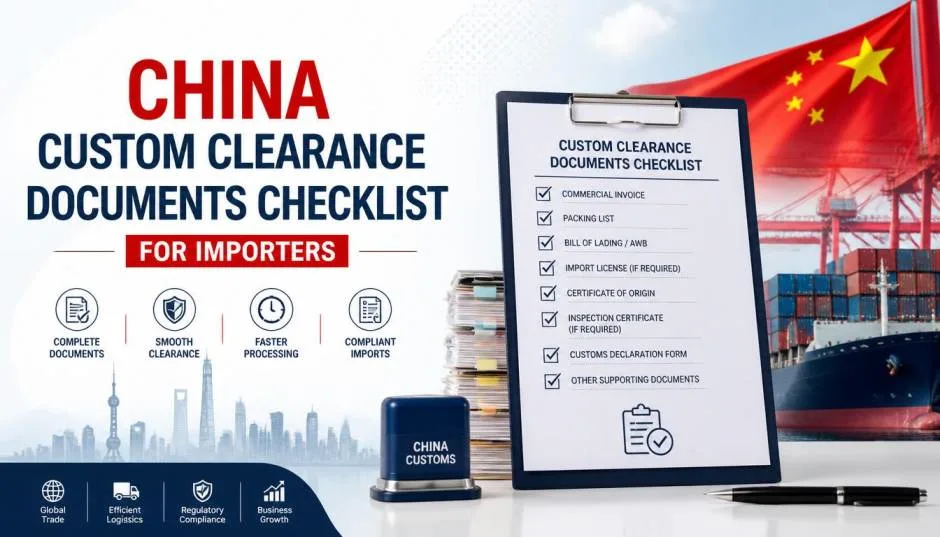
Here is the complete China custom clearance documents checklist you actually need.
The Absolute Essentials: Your Core Documents
These are non-negotiable. You cannot clear customs without them.
Read Also: Friend Shoring Impact on China Supply Chains in 2026
Commercial Invoice
This is the most important document. It details exactly what you are importing. The value. The quantity. The description. The seller and buyer information.
Make sure your invoice matches the goods exactly. Customs officers compare your invoice to the actual shipment. If something looks wrong, they will hold your container for inspection.
Packing List
This tells customs exactly what is inside each box or pallet. Weight. Dimensions. Number of packages.
I made a mistake once. I listed the wrong weight on my packing list. Customs weighed the container. It did not match. They held my shipment for two days while they verified everything. Do not make that mistake.
Bill of Lading or Air Waybill
This is your transport document. For sea freight, it is the Bill of Lading. For air freight, it is the Air Waybill.
This document proves you own the goods. Without it, you cannot clear customs.
Import Declaration Form
This is the official customs form. You submit it electronically through the Customs Administration's online system .
The form asks for all your shipment details. HS codes. Value. Importer information. You must fill it out accurately.
The Legal Stuff: Permits and Licenses
Certain goods need special permits. Do not ignore this.
Import License
Some goods require an import license. This includes restricted items. Controlled substances. Certain chemicals.
You Must Also Like: Future of China Technology in Electric Vehicles
Check before you ship. Your supplier might know. But do not rely on them. Verify with customs yourself.
Other Government Agency Permits
Depending on your product, you may need permits from other agencies.
For food products, you need health certificates. For cosmetics, you need specific approval numbers. Under Chinese regulations, cosmetics importers must provide registration numbers from the drug regulatory authority .
For plant or animal products, you need quarantine permits .
Certificate of Origin
This proves where your goods were made. Some products get preferential tariff rates depending on the country of origin.
For goods from China, you need a Certificate of Origin issued by the China Council for the Promotion of International Trade. Or the local Chamber of Commerce.
Vehicle Imports: Special Rules
If you are importing cars or motorcycles, there are special rules. Recent changes make it simpler.
The "Two Certificates in One" Reform
Starting July 1, 2026, China combined two documents into one .
Previously, you needed:
-
A separate import certificate
-
A separate vehicle inspection sheet
Now you get one document. The new Certificate of Imported Goods (Automobiles and Motorcycles). It includes all the customs, safety, and environmental inspection information in one place .
This saves time. It saves paperwork. And it means fewer chances to miss a document.
Zhejiang province was one of the first to implement this. Companies there can now complete the process in days instead of weeks .
How to Apply
You apply for the certificate through the Customs Administration's online system. You need to submit your import declaration first. Once customs clears your vehicle and inspects it, they issue the certificate .
You can apply online through the "Internet + Customs" platform. Or you can visit the customs office in person .
Personal Use Items: Special Rules
If you are importing goods for personal use, not commercial sale, there are different rules.
Personal Declaration Forms
China introduced electronic versions of personal declaration forms in late 2025 .
You can now fill these out online through the China International Trade Single Window platform. The electronic form has the same legal effect as the paper version .
Diplomatic and Official Use
If you are importing for diplomatic missions, there are separate forms. These are also available electronically through the same platform .
The Health Declaration Form
This one confuses people. Let me clear it up.
Good News: No More Mandatory Health Declarations
Since November 1, 2023, China no longer requires mandatory health declarations for entry or exit .
You do not need to fill in the health declaration form unless:
-
You have symptoms of infectious disease (fever, cough, difficulty breathing, vomiting, diarrhea, skin rash)
-
You have already been diagnosed with an infectious disease
If you have symptoms, you must report to customs officers. They will conduct temperature checks and other health screening .
Practical Tip
Even though health declarations are not mandatory, airlines still recommend filling them out online before travel. You can use the "Customs Passenger Clearance" mini-program on WeChat. Or the "China Customs" app .
Fill it out within 24 hours before departure. Not earlier. The system times out after 24 hours.
How to Submit Your Documents?
You have two options.
Online Submission
This is the preferred method. Submit everything through the Customs Administration online system.
The "Internet + Customs" platform is your main tool. You can also use the "China International Trade Single Window" platform .
Online submission is faster. It reduces errors. And you can do it 24/7.
Paper Submission
You can submit paper documents in person. But this is slower. And you need to visit the customs office during business hours.
I recommend online submission. It is more efficient. And it reduces the risk of missing documents.
No Fee
Good news. There is no fee for using the official online platforms. No service charge. No handling fee .
If someone asks you to pay for submitting documents through the official system, that is a red flag.
Common Mistakes to Avoid
I have made most of these mistakes. Learn from me.
Mistake 1: Wrong HS Code
Your HS code determines your duty rate. Use the wrong code, and you pay too much duty. Or too little. The latter gets you in trouble.
Double-check your HS code with your supplier. Cross-reference it with the Customs Administration database.
Mistake 2: Incomplete Description
Customs needs to know exactly what you are importing. Vague descriptions cause delays.
Be specific. "Electronic components" is too vague. "Resistors, 100 ohm, 1/4 watt, surface mount" is better.
Mistake 3: Incorrect Value
Customs may not accept your declared value if it seems too low. They will assess the goods themselves. Then you pay duty on their assessment.
Always declare the actual transaction value. Include all costs. Freight. Insurance. Royalties. Do not try to save duty by under-declaring. It is not worth the risk.
Mistake 4: Missing Permits
Some goods need special permits. If you do not have them, customs will hold your shipment. You might lose the container entirely.
Check the permit requirements before you ship. Do not assume your supplier or forwarder will handle it.
My Personal Advice
I have been importing from China for years. Here is what I have learned.
Work with a Good Customs Broker
A good broker is worth their weight in gold. They know the system. They know the paperwork. And they can fix problems fast.
Do not try to do everything yourself. Especially if you are new to importing.
Keep Digital Copies
Scan every document. Keep them in the cloud. If you lose a paper copy, you have a backup.
Double-Check Everything
One mistake can cost you days and hundreds of dollars. It is worth spending an extra hour to check your documents.
Stay Updated
Customs rules change. The vehicle import reform is a recent example. Make sure you know the latest requirements before you ship.
Final Thoughts
Importing from China is not complicated. But it is detailed. You need to get the paperwork right. The core documents are straightforward. Commercial invoice. Packing list. Bill of lading. Import declaration.
The extra documents depend on your product. Vehicles need special certificates. Food needs health certificates. Cosmetics need approval numbers.
Health declarations are no longer mandatory. But bring them anyway if you have symptoms. Submit everything online through the official platforms. It is faster and free.
And check, check, check your documents before the ship leaves. Trust me on this one.